How to Fall Asleep Fast: Natural Methods That Actually Work
Lying awake staring at the ceiling is one of the most frustrating experiences there is, especially when you know you have to be up early. If you’re searching for how to fall asleep fast, the good news is that most of what works isn’t complicated. It’s a handful of proven techniques, a consistent bedtime routine, and avoiding a few habits that quietly interfere with sleep.
While there’s no guaranteed trick that makes everyone fall asleep in five minutes, research shows that calming your nervous system, keeping your body clock consistent, and creating the right sleep environment can significantly improve how quickly you drift off.
Whether your mind won’t stop racing, you feel exhausted but strangely alert, or you’re simply looking for natural ways to improve your sleep, this guide covers practical methods that actually work.
Why can’t I fall asleep even when I’m tired?
One of the biggest misconceptions about sleep is that being tired automatically means you’ll fall asleep quickly. In reality, tiredness and sleepiness aren’t exactly the same thing.
Tiredness is physical or mental fatigue after a long day. Sleepiness is your brain’s readiness to transition into sleep, largely controlled by your circadian rhythm and a natural chemical called adenosine, which builds up the longer you’re awake.
You can feel physically exhausted but still struggle to sleep if your nervous system remains alert. This often happens after stressful days, late-night work, excessive screen time, or consuming caffeine later than you realise.
Common reasons you can’t fall asleep
Stress and anxiety
When you’re worried about tomorrow’s meeting, replaying conversations, or thinking through an endless to-do list, your brain stays in problem-solving mode instead of winding down. Stress hormones such as cortisol remain elevated, making it difficult to relax enough to sleep.
Too much screen time
Phones, tablets, televisions, and laptops expose you to bright light during the evening. More importantly, scrolling through social media, replying to messages, or watching stimulating videos keeps your brain mentally engaged when it should be preparing for rest.
Caffeine late in the day
Many people underestimate how long caffeine stays in the body. Even if your afternoon coffee doesn’t make you feel particularly energised, it can still reduce sleep pressure several hours later, making it harder to fall asleep at bedtime.
An inconsistent sleep schedule
Sleeping in at weekends or going to bed at dramatically different times each night can confuse your body’s internal clock. The more consistent your bedtime and wake-up time, the easier it becomes for your brain to recognise when it’s time to sleep.
An overstimulating evening routine
Working until the moment you climb into bed, exercising intensely late at night, or having emotionally charged conversations can all keep your body in a more alert state than you’d like.
The encouraging news is that most of these factors can be improved through small, consistent lifestyle changes rather than dramatic interventions.
How to fall asleep fast naturally
If you’re looking for the fastest way to fall asleep, the answer usually isn’t a single trick. Instead, it’s about helping your brain and body shift from an alert state into a relaxed one.
The following techniques are among the most widely recommended because they focus on reducing mental stimulation, slowing your breathing, and relaxing tense muscles. They may not work instantly the first time you try them, but they often become more effective with regular practice.
The military sleep method
One of the most talked-about sleep techniques is the military sleep method, originally designed to help military pilots fall asleep under stressful conditions.
Although it has become popular online as a “fall asleep in two minutes” technique, it’s important to remember that most people need to practise it consistently before seeing results.
How to do the military sleep method
Follow these steps while lying comfortably on your back:
- Relax the muscles in your forehead.
- Let your eyes soften and release any tension around your jaw.
- Drop your shoulders as low as they’ll comfortably go.
- Relax one arm completely, then the other.
- Breathe out slowly and allow your chest to sink naturally.
- Relax your stomach, hips, thighs, calves, and finally your feet.
- Picture a peaceful, quiet scene, such as floating on a calm lake or lying in a peaceful meadow.
- If distracting thoughts appear, gently return your attention to the calming image without becoming frustrated.
The purpose isn’t to force yourself to sleep. Instead, you’re removing physical tension that signals your brain it’s safe to relax.
Does the military method actually work?
Scientific studies specifically on the military sleep method are limited. However, the technique combines several relaxation strategies that sleep experts regularly recommend, including muscle relaxation, controlled breathing, and guided imagery.
For many people, it’s less about falling asleep in exactly two minutes and more about reducing the mental chatter that keeps them awake.
The 4-7-8 breathing technique
Breathing exercises are one of the simplest natural ways to encourage relaxation before bed. Among them, the 4-7-8 breathing technique has become especially popular because it helps slow your breathing and activate your body’s natural relaxation response.
When you breathe slowly and deeply, your heart rate begins to settle, muscle tension eases, and your parasympathetic nervous system—the part responsible for rest and recovery—becomes more active.
How to practise 4-7-8 breathing
- Breathe in quietly through your nose for 4 seconds.
- Hold your breath for 7 seconds.
- Exhale slowly through your mouth for 8 seconds.
- Repeat the cycle four times.
Don’t worry if holding your breath for seven seconds feels challenging at first. With practice, the technique becomes more comfortable.
Many people find it particularly useful after stressful days or whenever racing thoughts make it difficult to unwind.
Why does slow breathing help?
Slow breathing helps interrupt the body’s stress response. Instead of remaining in “fight or flight” mode, your nervous system gradually shifts toward a calmer state that’s more supportive of sleep.
While breathing exercises won’t eliminate every cause of insomnia, they can make it easier to transition from a busy day into a restful night, especially when combined with other healthy sleep habits.
Progressive muscle relaxation
If stress tends to show up physically, such as tight shoulders, a clenched jaw, or tense legs, progressive muscle relaxation (PMR) can be an effective way to prepare your body for sleep.
The technique involves deliberately tensing one muscle group at a time before slowly releasing it. This contrast makes it easier to recognise and let go of tension that you may not even realise you’re holding.
Research has shown that progressive muscle relaxation can help reduce physical tension, lower stress levels, and improve sleep quality, particularly for people who struggle to switch off at the end of the day.
How to practise progressive muscle relaxation
Lie comfortably in bed and work through your body from your feet upwards.
- Tighten the muscles in your feet for five seconds.
- Slowly release the tension and notice the feeling of relaxation.
- Repeat with your calves.
- Move to your thighs.
- Tighten your glutes and hips.
- Relax your stomach.
- Gently tense your hands and arms.
- Lift your shoulders slightly before letting them fall naturally.
- Finally, tense your facial muscles for a few seconds before relaxing your forehead, eyes, jaw, and mouth.
The entire exercise usually takes around 10 minutes and pairs well with slow, controlled breathing.
Cognitive shuffling: distract your brain from racing thoughts
If your biggest struggle is an overactive mind, cognitive shuffling may be worth trying.
Unlike counting sheep, which quickly becomes repetitive, cognitive shuffling gives your brain a series of random, unrelated thoughts to focus on. This mimics the scattered thinking patterns that naturally occur as we begin falling asleep.
Instead of planning tomorrow’s schedule or replaying conversations, your mind shifts towards neutral mental images, making it easier to drift off naturally.
How to use cognitive shuffling
Choose a simple word, such as SLEEP.
Now think of unrelated words beginning with each letter.
For example:
- Sunflower
- Sandwich
- Socks
- Silver
Move on to the next letter.
- Lemon
- Lantern
- Library
- Leaf
Continue until your attention naturally fades into sleep.
The words don’t need to make sense together. In fact, the more random they are, the better. The goal is simply to interrupt repetitive thinking patterns that keep your brain alert.
Make your bedroom work for sleep
Even the best relaxation techniques become less effective if your sleep environment constantly signals your brain to stay awake.
A bedroom designed for sleep doesn’t have to be expensive. A few simple adjustments can make falling asleep faster much easier.
Keep your room cool
Most sleep experts recommend keeping your bedroom between 16°C and 19°C.
As your body prepares for sleep, your core temperature naturally drops. A cool room supports this process and often leads to deeper, more comfortable sleep.
If adjusting the room temperature isn’t possible, lighter bedding or breathable sleepwear can help prevent overheating.
Reduce light exposure
Light is one of the strongest signals affecting your body’s internal clock.
Even small amounts of artificial light can delay the release of melatonin, the hormone that helps regulate sleep.
Try to:
- Use blackout curtains if outside light is a problem.
- Turn off unnecessary lights around the house.
- Avoid looking at your phone once you’re in bed.
- Consider using an eye mask if complete darkness isn’t possible.
The darker your room, the easier it is for your brain to recognise that it’s time to sleep.
Minimise noise
Unexpected sounds can interrupt the process of falling asleep, even if they don’t fully wake you.
If outside noise is unavoidable, consider:
- A white noise machine
- A fan
- Soft nature sounds
- Comfortable earplugs
Consistent background noise often masks sudden sounds that would otherwise disrupt your sleep.
Keep your bed for sleep
It can be tempting to answer emails, watch television, or scroll through social media in bed.
Over time, however, your brain starts associating your bed with being awake rather than sleeping.
Whenever possible, reserve your bed for sleep and intimacy only. If you’re unable to fall asleep after about 20 minutes, many sleep specialists recommend getting out of bed, doing something quiet in dim lighting, and returning only when you begin to feel sleepy again.
Does what you eat affect how fast you fall asleep?
Yes, but it’s usually when you eat rather than what you eat that has the biggest impact.
Eating a large meal shortly before bed keeps your digestive system active when your body should be winding down. This can leave you feeling uncomfortable, increase the likelihood of acid reflux, and delay sleep.
Similarly, drinking caffeine later in the day can make it more difficult to fall asleep, even if you don’t feel particularly energised.
Because caffeine has a half-life of around five to six hours, an afternoon coffee may still be affecting your sleep long after dinner.
Alcohol can also be misleading. While it often makes people feel sleepy initially, it commonly reduces overall sleep quality by causing more frequent awakenings during the night.
Foods that may support healthy sleep
No single food will instantly make you fall asleep, but some nutritious foods contain compounds associated with healthy sleep.
These include:
- Kiwi
- Tart cherries
- Oats
- Bananas
- Almonds
- Walnuts
- Foods naturally rich in magnesium
Rather than relying on one “superfood,” aim for a balanced evening meal and avoid going to bed either overly full or hungry.
Simple evening nutrition tips
- Finish your last large meal two to three hours before bed.
- Limit caffeine during the afternoon and evening.
- Avoid excessive alcohol close to bedtime.
- Stay hydrated, but avoid drinking large amounts immediately before bed to reduce overnight bathroom trips.
Final Thoughts - Falling asleep faster isn’t about finding one miracle technique. It’s about building habits that help your body recognise when it’s time to wind down. A consistent sleep schedule, a relaxing bedtime routine, limiting caffeine later in the day, and practising relaxation techniques can all make it easier to fall asleep naturally and wake up feeling more refreshed.
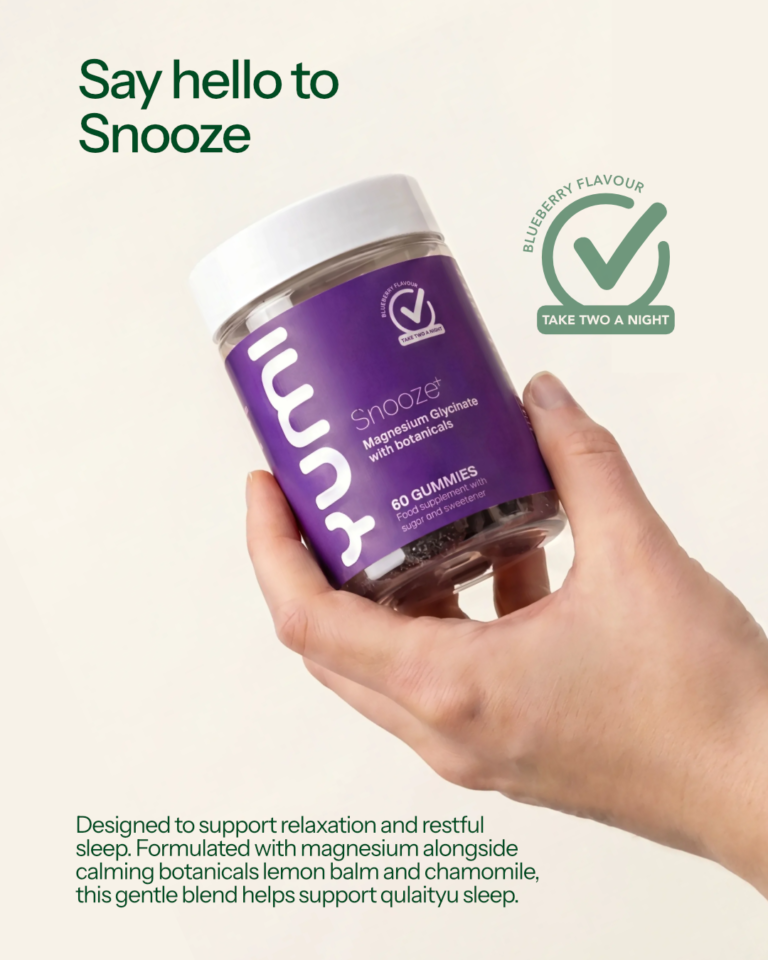
- If you’ve already established healthy sleep habits but still struggle to switch off at night, gentle nutritional support may be the missing piece.
- Our Bedtime Gummies are formulated with 100mg of 5-HTP from Griffonia Seed Extract to support your body’s natural sleep cycle. Combined with passionflower extract, they’re designed to complement your evening routine and help you unwind naturally, without becoming part of an overly complicated bedtime ritual.
- If you’re ready to give your evenings a little extra support, explore our Bedtime Gummies and see how they can become part of a healthier nighttime routine.
- Explore Bedtime Gummies →